
The Proteins We Should Eat: A list of High Protein Foods
The Proteins We Should Eat: A list of High Protein Foods
 Most health problems we have today can be traced back to the foods we eat and choose not to eat. Honestly, most of those problems are linked to not balancing blood sugar. When I tell patients they need to clean up their diet and stop eating bread, pasta, cakes, cookies, candy, rice, potatoes, soda, brownies and doughnuts, they respond with one of two choices: They cry, or, say there's nothing left to eat. It really isn't the end of the world! There is, in fact, plenty to eat. If it grew out of the ground or used to walk on the ground, fly in the sky or swim in the sea, you are pretty safe eating it. Most people are still overwhelmed by this, so here's a list of high protein foods you should be eating.
Mammals
Most of our American diet comes from this group. Personally, I'm a huge fan of beef, bacon, and lamb. We still have to be somewhat careful with what we choose to eat off this list. Concentrate on eathing these thin...
Friday Feast - Paleo Chicken Fajitas with Peach Salsa
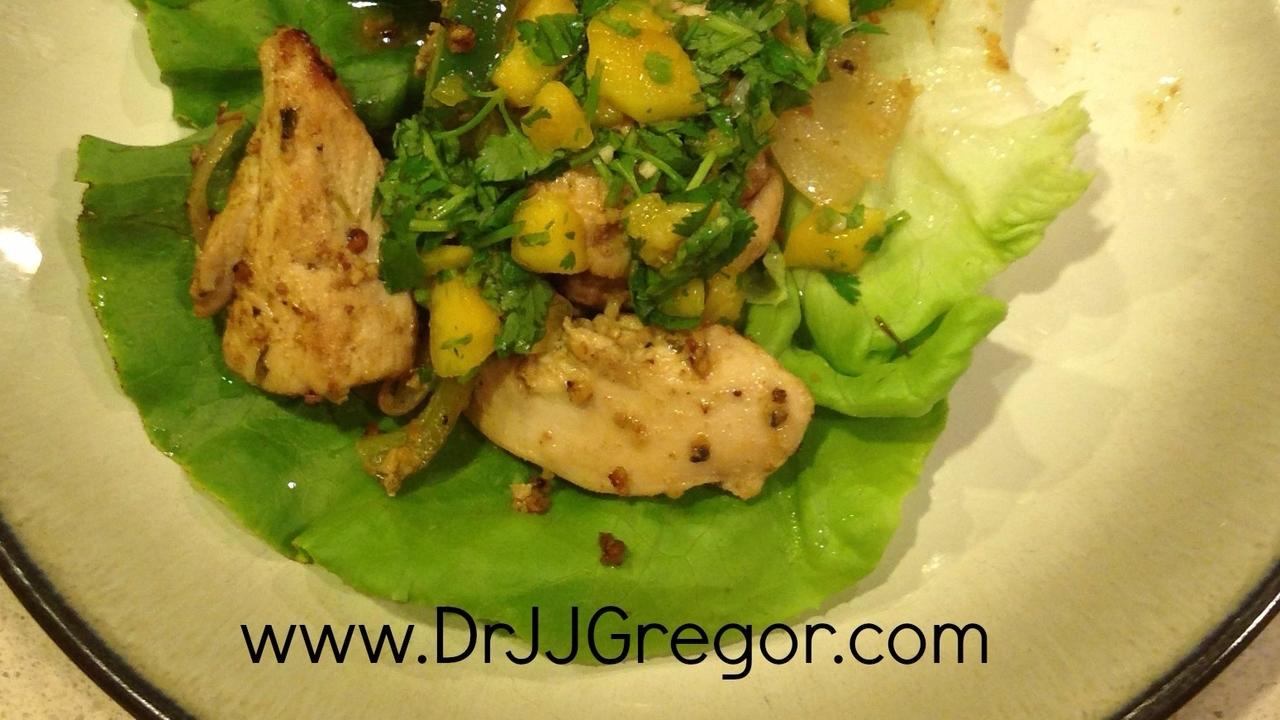
Paleo - Chicken Fajitas with Peach Salsa
This was a simple Paleo meal that I cooked up in about 30 minutes. It really was delicious and easy my 19 month old toddler loved this one too! When making this one I suggest making the Salsa first because it really does need that 30 minutes to marinate and really bring out some great flavors! The fajitas only took about 20 minutes from prep to table. You can also look at adding other "Mexican" spices to this mix and really bring out some great flavors. Such as Paprika and Cayenne pepper. Hope you all enjoy!
Paleo Chicken Fajitas
- 3 tablespoons olive oil, divided
- 11⁄2 lb chicken cutlets, thinly sliced
- 1 large green bell pepper, thinly sliced
- 1 large red onion, thinly sliced
- 4 cloves garlic, minced
- 1 teaspoon ground cumin
- 1 teaspoon kosher salt
- 1⁄2 teaspoon black pepper
- 2 heads Butter Leaf lettuce
Peach Salsa
- 4 large peaches, chopped
- 1⁄4 cup chopped fresh cilantro
- 2 tablespoons lime juice
- 1 tablespoon finely ch ...
Friday Feast - Paleo Orange-Rosemary Chicken & Roasted Grape Tomatoes
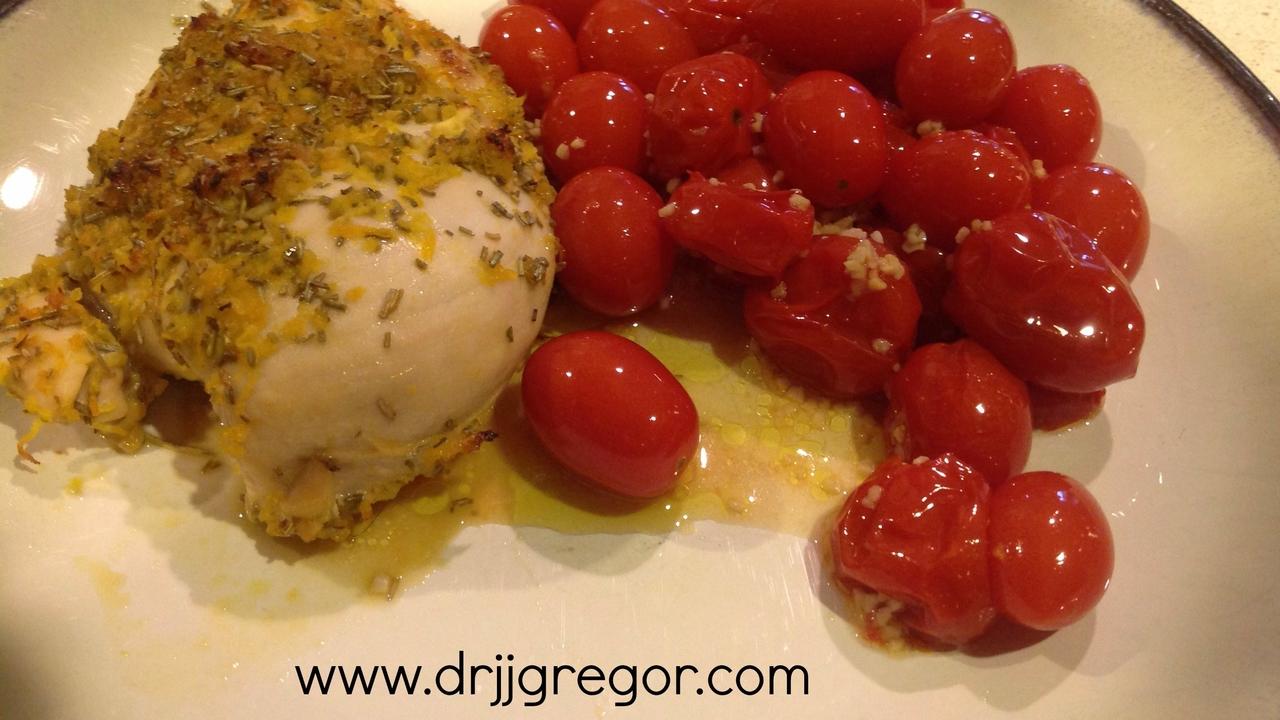
Paleo Orange-Rosemary Chicken
Its Friday so here is another quick Paleo meal that was super easy to knock out. The prep was fast the longest step in the process is the baking, which was really only about 30 minutes. You can try some experiments with the tomatoes that I thought of after dinner, of adding fresh basil to them or possibly using them with some mozzarella. Let me know if you tried them and how they worked out. Also, you may want to think about cutting the tomatoes in half, I had one explode on me when I stuck my fork into it. PS word of caution don’t zest to deep into the orange like I did it is more of a bitter taste, a little zest goes a long way.
Orange-Rosemary Chicken
- 3 bone-in chicken breasts
- Zest and juice of 1 orange
- 3 tablespoons finely chopped fresh rosemary
- 4 cloves garlic, minced
- 11⁄2 teaspoons kosher salt,
- 1⁄2 teaspoon pepper
Roasted Grape Tomatoes
- 2 pints grape tomatoes
- 2 tablespoons olive oil (enough to coat the tomato’s)
- 4 cloves ...
Friday Feast - Primal - Grilled Balsamic Pork Tenderloin
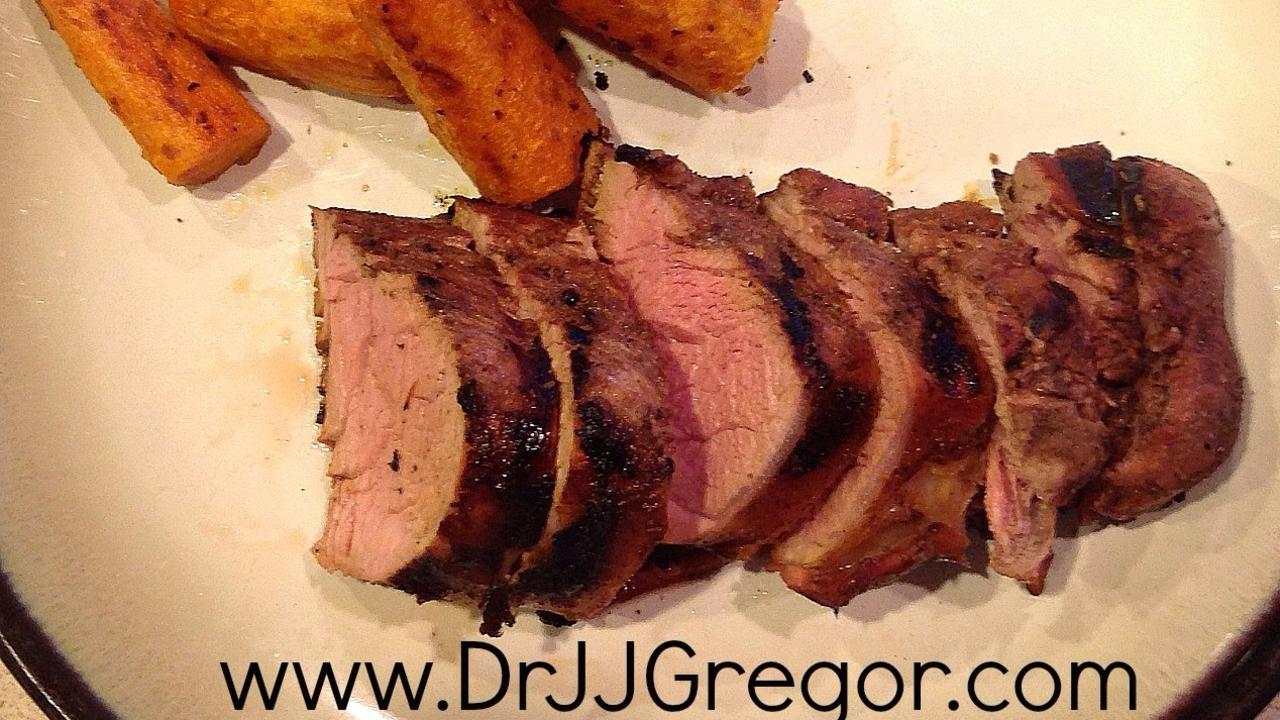
Primal - Grilled Balsamic Pork Tenderloin & Mustard, Basil-Roasted Carrots
We try not to overdo the pork but this grilled balsamic pork tenderloin looked to good not to try. The carrots topped it off perfect! It was really fast and easy, perfect for a quick weeknight meal.
Grilled Balsamic Pork Tenderloin
- 2 lb pork tenderloin
- 1⁄4 cup organic balsamic vinaigrette
- 3 cloves garlic, minced
- 1 teaspoon salt
- 1 teaspoon pepper
- 2 tablespoons olive oil
Mustard Basil-Roasted Carrots
- 1 lb carrots, peeled and cut into 1-inch pieces
- 2 tablespoons extra virgin olive oil
- 1 tablespoon Dijon mustard
- 2 tablespoons finely chopped fresh basil
Preheat grill. Marinate pork with vinaigrette, garlic, salt and pepper while you prepare the carrots. Place pork on a grill rack rubbed with oil. Grill 20 minutes, turning so that you char and mark the pork on all sides, or until done. Wrap in foil and let stand 10 minutes before slicing. Note: The safe internal temperature for pork is 145 degre...
List of Vitamins In The Foods You Should Be Eating

This is a basic guide that will assist you in determining what foods to eat that will be most beneficial in supplementing the vitamins your body needs. With so many choices it won’t be difficult to maintain a healthy diet and make it much easier to avoid the foods that are causing you problems. Foods that contain Vitamin A, include:
| Liver | Eggs | Butter | Apricots |
| Carrots | Cantaloupe | Tomatoes | Spinach |
| Peaches | Peppers | Yams | Kale |
| Mango | Broccoli | Collards | Pumpkin |
| Peas |
Foods that contain Vitamin B1 (Thiamine), include:
| Brewer’s Yeast | Blackstrap | Molasses | Brown Rice |
| Sunflower Seeds | Brazil Nuts | Eggs | Liver |
| Poultry | Fish | Beef | Flax |
| Kale | Oatmeal | Cauliflower | Asparagus |
Foods that contain Vitamin B2 (Riboflavin), include:
| Almonds | Eggs | Liver | Brussels Sprouts |
| Leafy Green Veggies | Cheese | Fish |
Foods that contain Vitamin B3 (Niacin), include:
| Salmon | Tuna | Beef | Chicken |
Friday Feast - Primal Pan-Seared Filet of Beef

Primal meal of Pan-Seared Filet with Warm Gorgonzola & Cherry Tomatoes.
I normally HATE tomatoes, seriously Hate them! But Erin loves them so I use them every now and then. I justified using the Warm Gorgonzola & Cherry Tomatoes because of the pan-seared filet, which I LOVE! I have to admit the tomatoes were AWESOME! The hardest part of the whole meal was cutting tomatoes, so this is a great and very quick Primal Meal.
Ingredients: 3 Tbs of Grass Fed Butter
1/2 tsp. Salt
1/2 tsp. Pepper
3 - 8 oz. Filets of Beef 2 Tbs Grass Fed Butter2 Pints Cherry or Grape Tomatoes, cut in 1/2
4 Cloves of Garlic Minced
2 Tbs. Chopped Fresh Basil
1 cup Crumbled Gorgonzola Cheese (skip if your Paleo or Dairy Sensitive)
Directions:
Pan-Seared Filet
Salt and Pepper the stakes as desired. Let the stakes warm up slightly before cooking. Heat a heavy bottomed skillet over high heat. Once the skillet is hot drop the butter into the pan, as it melts place each filet on the melting butter. Turn the steak...
Physiology of the Human Heart

Educational Content Disclaimer: This article provides educational information only and is not intended as medical advice, diagnosis, or treatment. The content discusses general health topics and should not replace consultation with your licensed healthcare provider. Always consult with your doctor before making changes to your diet, supplements, or medications. Dr. JJ Gregor is a Doctor of Chiropractic licensed in Texas and practices within the scope of chiropractic care.
The human heart, both physically and spiritually, is one of the most amazing creations in the universe.
As such, it's sad to me that the heart is also the leading cause of so many deaths in this country. Of the 2 million or so deaths every year, about 750,000 of them will have something to do with your cardiovascular system.
From the time we are in our mother's womb until we take our last breath, our heart—our most important muscle—tirelessly pumps.
Let's talk about how this incredible organ works, what it n...
Friday Feast - Paleo Grilled Five Spice Chicken
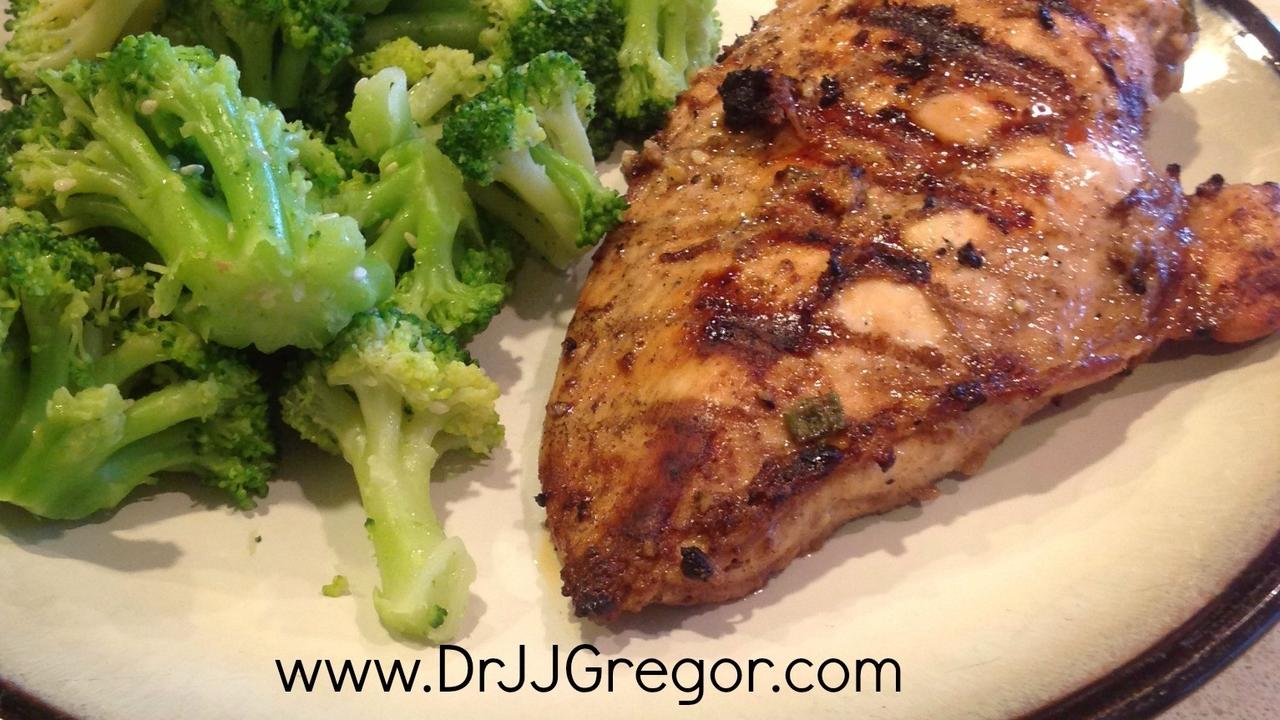
Paleo Grilled Five Spice Chicken & Sesame Broccoli
I know I say it every week but this was one of the easiest paleo meals we have done. This week has been crazy busy and we haven't had much time to cook and plan this week so the ease of this one was awesome! I put everything in the marinade in the morning and had it ready and on the table 25 min after I walked in the door.
Ingredients:
1 Bunch Chopped Green Onions
4 Tbs. Sesame oil
3 Tbs. Rice Vinegar
5 Cloves of Garlic Minced
3 Tsp. Chinese Five Spice
2 Tsp. Salt
4 Organic Free-range Chicken Breasts 1 lb Broccoli Florets (Frozen or Fresh)
4 Tbs. Toasted Sesame Seed Oil
3 Tbs. Sesame Seeds
Salt and Pepper to taste
Directions: Combine Green Onions, Sesame oil, Vinegar, Garlic, Chinese Five Spice powder, and Chicken in a large zip top bag and marinate in the refrigerator for at least two hours (I did it before I went to work). Then Grill for 6-8 Minutes per side or until done. Using a steamer basket lightly steam the broccoli. Re...
Heart Attack Symptoms
Educational Content Disclaimer: This article provides educational information only and is not intended as medical advice, diagnosis, or treatment. The content discusses general health topics and should not replace consultation with your licensed healthcare provider. Always consult with your doctor before making changes to your diet, supplements, or medications. Dr. JJ Gregor is a Doctor of Chiropractic licensed in Texas and practices within the scope of chiropractic care.
Your doctor tells you to lower your cholesterol or you'll have a heart attack.
You take the statin. Your cholesterol drops. You feel terrible.
Then you have a heart attack anyway.
Why? Because cholesterol doesn't cause heart attacks. Half of all heart attack victims have normal or low cholesterol.
Here's what you actually need to know: how to recognize a heart attack when it's happening, what really causes them, and how to prevent them without medication.
Heart Attack Symptoms: Know Them, Don't Ignore Them...
But I Just Bent Over To Pick Up A Pencil!

I hear it almost every day in practice, "I was helping a friend move, and now my back is killing me!" With more than 1/3 of all moves happening during the summer, I've heard it a lot! If you're anticipating a move this summer or even if you just got suckered into helping a buddy move, you will be lifting, bending, packing, reaching, climbing. You need to ensure you don’t hurt yourself by lifting correctly.
Lifting correctly Can HELP but it's not all!
Most of us already have some abnormal body function taking place. If we lift and something ‘snaps,' the damage was most likely already there, just brought to the surface by the effort. Your back doesn't slip while trying to pick up a pencil; it's simply not a sudden injury that occurs. There has been a tremendous amount of research done over the past few years about why these seemingly random injuries take place, particularly during innocuous tasks. Chiropractic and Applied Kinesiology uses muscles to determine different movement ...