
The 72-Hour Reset: Why This Window Is Real and How to Actually Use It
Educational Content Disclaimer: This article provides educational information only and is not intended as medical advice, diagnosis, or treatment. The content discusses general health topics and should not replace consultation with your licensed healthcare provider. Always consult with your doctor before making changes to your diet, supplements, or medications. Dr. JJ Gregor is a Doctor of Chiropractic licensed in Texas and practices within the scope of chiropractic care.
Who are you following?
Are you letting the tech giants lead you? Are you outsourcing your brain power to an algorithm? Are you letting AI drive your decisions, your attention, your imagination? Because here is what I know after 24 years of watching people get healthier and watching people stay stuck: the people who get better are the ones who decide what they are following. Not what they are reacting to.
This is a post about your phone. But it is really about that question.
If you haven't read Sunday's post, go read it. It's pretty good if I do say so myself. Short version: a peer-reviewed fMRI study showed that 72 hours of smartphone restriction produces brain withdrawal patterns nearly identical to drug and alcohol withdrawal. Same circuits. Same mechanism.
Today we're talking about exactly what to do with that information. Specifically: why 72 hours, what is happening in your brain during each phase of that window, why willpower fails every single time, and the actual protocol.
There is an old prayer, sometimes called the serenity prayer, that goes something like: God, grant me the wisdom to know the things I can change, the things I cannot change, and the difference between the two. That is what this post is. The things you can change are here. Understanding the things you cannot white-knuckle your way through is the rest of it.
Why 72 hours specifically.
This is not an arbitrary number pulled from a wellness trend. When I talk to patients about meaningful biological change, I use a simple framework: three days, three weeks, three months. Three days is the neurological quick hit, the detox phase, the first measurable shift in neurobiology. Three weeks is closer to the hormonal and larger circadian shift, that one full cycle of the moon where the endocrine system starts to recalibrate. Three months is a full season of life. A quarter of the year. That is where you see the deepest, most durable changes.
One of the best clinical results I have ever seen was with a patient on the Whole30 about ten to twelve years ago. She was always on the brink of autoimmunity, never quite tipping over into it but never pulling away from it either. She did the Whole30 and kept going after thirty days. Kept going after sixty. Ended up doing six full months. Her autoimmune markers have not regressed since. Her OCD symptoms have essentially disappeared. That six months of diligence built something her body has held onto for over a decade.
The 72-hour window for a phone detox is the same entry point. It is not the cure. It is where the reset begins.
The companion fMRI study to the withdrawal research showed this directly. The brain does not just suffer the absence of the device during those three days. It actively recalibrates. Resting-state neural connectivity patterns shift measurably. The reward circuitry that has been running in overdrive starts to quiet. Three days is where the biology starts to move.
Here is what is happening hour by hour.
Hours 0 to 6: This is when desire thinking peaks. Researchers define desire thinking as the mental rehearsal of using the device, playing out what might be there, who might have responded, what might have appeared in the feed since you last checked. Your brain runs this simulation automatically, the same way it runs cravings for food when you are hungry.
Here is the important distinction. Desire thinking does not just reflect craving. It amplifies it. The mental rehearsal makes the pull stronger than it was before you started rehearsing.
This connects directly to the presence work I have written about before: getting into the gap between stimulus and response. The stimulus is the impulse to pick up the phone. Something might be there. I might be missing something. The response is the scroll, the dopamine hit. The gap is where you get to choose. That gap is what the first six hours of a phone detox is actually training.
Hours 6 to 24: Cortisol begins to normalize. The low-grade threat detection state that constant news and notification exposure maintains starts to downgrade. You start coming out of fight or flight. For anyone who is already dealing with adrenal dysregulation, this window matters a lot.
This is also when most people experience something they were not expecting: boredom that feels almost physical. That boredom that hurts a little, the FOMO, the sense of missing something. That boredom is real and it is important. Some of the greatest innovations in human history happened because someone was sitting around with nothing to consume. Boredom is where creativity lives. Your nervous system is looking for the dopamine hit that is no longer coming, and finding that real life at baseline feels quieter than the device trained it to expect.
Think about artificial sweeteners. They hit harder than real sugar. Your taste receptors are calibrated to a level of stimulation that real food cannot match after sustained artificial input. Same thing here. That gap is not permanent. It is the receptor sensitivity recalibrating. It does recalibrate. Your brain wants to.
Hours 24 to 72: This is where the fMRI data shows measurable resting-state neural reorganization. Mood improves. Participants in the research reported better quality of life. The prefrontal executive function that excessive smartphone use degrades begins to recover. The world does not get more interesting in these hours. Your capacity to find it interesting returns.
Why willpower fails.
Nothing is wrong with you if you have tried to cut back and failed. Your strategy is wrong. That is a different problem and it has a different solution.
Willpower is a function of the prefrontal cortex. Sustained effort at resisting a compulsion requires inhibitory control, working memory, and the capacity to hold your long-term goal in mind while declining the immediate reward. Those are all prefrontal functions.
I am guilty of this myself. Every time I stand in line somewhere, the phone comes out. Quick scroll, check email, look for something to give me that dopamine kick. Every single one of those thirty-second grabs is the prefrontal cortex running a hundred-meter sprint trying to manage the impulse. Do that hundreds of times a day, day after day, and you are wearing out the exact system you would need to actually stop.
Chronic smartphone overuse degrades those prefrontal functions directly. A 2017 EEG study found reduced prefrontal cortex excitability in heavy users. A 2023 fMRI study found aberrant frontoparietal network function across every cognitive task tested. Not just phone-related tasks. Everything. The damage is not situational. It is systemic.
You are being asked to use the compromised system to fix itself. That does not work. Failing at it is not a character flaw.
The strategy that works is environmental design. Remove the cue before the craving starts. Interrupt the desire thinking loop before it has anything to rehearse. Change what is available in your environment so that inhibitory control is not the only thing standing between you and the device.
This is the exact same logic as hyperpalatable food. The food industry engineered products that overwhelm your satiety signals the same way the attention economy engineered apps that overwhelm your reward system. The answer is not stronger willpower in the presence of Doritos. The answer is to not have Doritos in the house.
The protocol. Two tracks, running simultaneously.
Track 1: Make the phone dumb.
Switch to grayscale. Color is one of the primary visual reward cues the apps use to drive engagement. Red notification badges, saturated thumbnails, the orange of a like button. Pull the color out and the device becomes less compelling at the perceptual level before you have changed a single behavior. On iPhone: Settings > Accessibility > Display and Text Size > Color Filters > Grayscale. On Android: Settings > Digital Wellbeing > Bedtime mode, or search Grayscale in accessibility settings.
Turn off all notifications except phone calls. Not reduced. Off. Every notification is a cue. Every cue triggers desire thinking.
Delete social media apps. Not move them to a folder. Delete them. You can access them from a desktop browser. What you are eliminating is the frictionless impulse check.
Remove email from your phone for 72 hours. Email is a variable reward schedule the same as social media. Nothing will catch fire in three days.
In the evenings, put the phone in a lockbox or a drawer in another room. There are also purpose-built bricking devices you can tap your phone against that lock it for a set period of time. There are app blockers. Use whatever friction works for you. The goal is the same: remove the device from the environment where desire thinking is most likely to run.
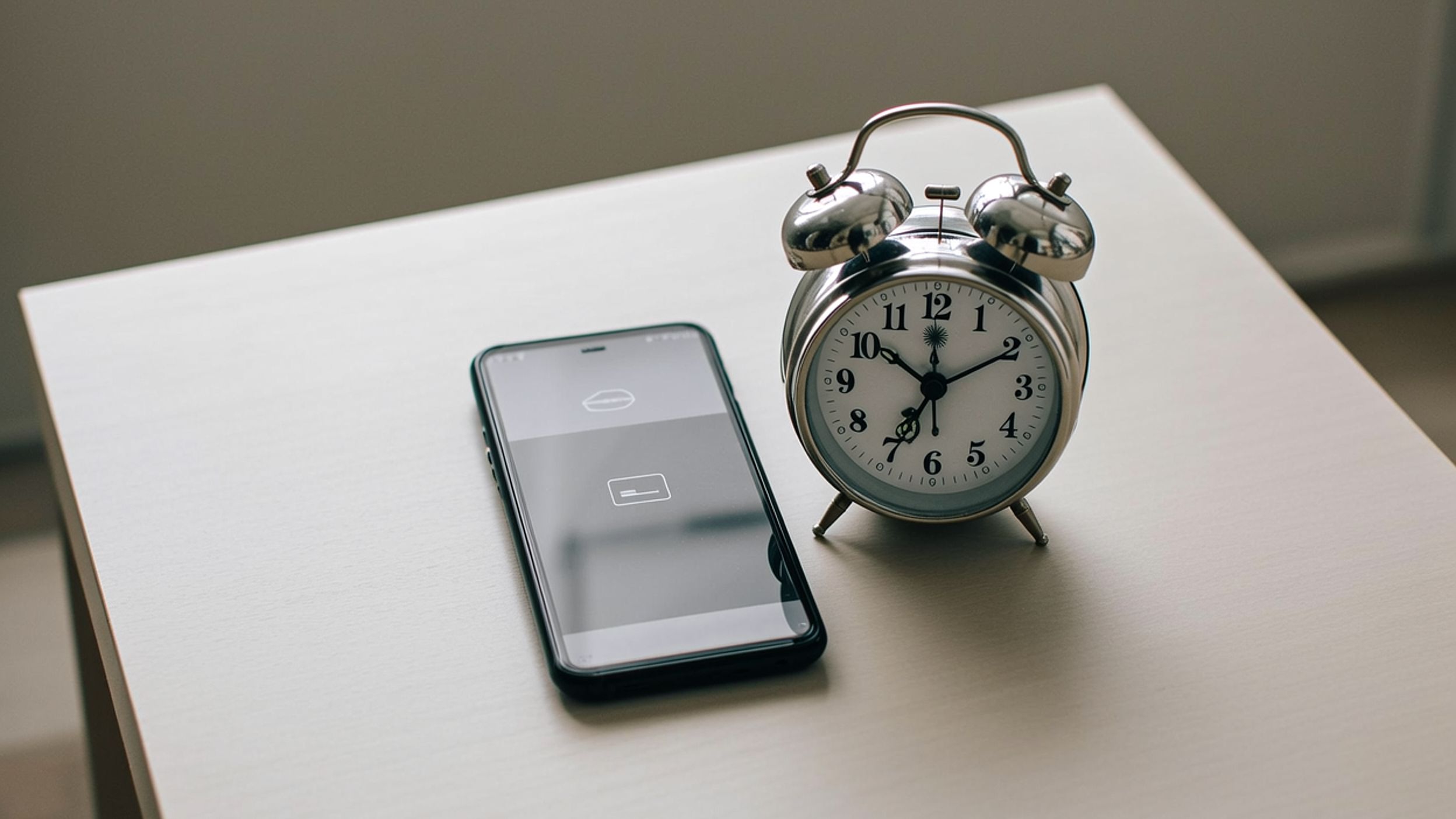
Charge the phone outside the bedroom. Every night. Physical alarm clock.
Track 2: The phase protocol.
Hours 0 to 6: Move. Go outside. Research on bird diversity and natural soundscapes showed that exposure to natural environments with biological complexity measurably accelerates attention restoration in ways that indoor environments do not. This is not a suggestion to enjoy fresh air. It is a targeted intervention for the peak desire thinking window. The movement gives the simulation circuit something else to do.
Hours 6 to 24: Protect sleep. The cortisol normalization happening in this window is dependent on sleep quality. No phone in the bedroom. This is also when to reintroduce long-form reading. Not articles. A book. The sustained attention required for a chapter is itself a form of prefrontal rehabilitation.
Hours 24 to 72: Structured exercise. A 2020 review of exercise interventions for internet addiction identified three specific mechanisms: HPA axis normalization, restoration of brain-derived neurotrophic factor which supports prefrontal cortex structure, and dopamine receptor upregulation which is the direct reversal of the downregulation driving the addiction. A 2026 EEG study confirmed cognitive restoration from a single aerobic exercise session in smartphone-addicted adolescents. This is targeted neurological rehabilitation, not general wellness.
One thing to do today: switch your phone to grayscale right now. Thirty seconds. You will notice the device is less magnetic within the first hour because color is a hook and you just pulled it out.
Thursday I am going deep on the neuroscience behind all of this: the imaging studies showing structural brain changes, why the anterior cingulate cortex is the piece most people miss, and what the recovery data looks like at the neurochemical level.
Come back to the question I opened with.
Who are you following? Are you letting the tech giants decide what your attention is worth and who gets it? Because here is what I know: we are not getting the dopamine of creation anymore. We are only getting the dopamine of consumption. Mindless, fast, endless consumption. And your imagination, your capacity for original thought, your ability to sit with a problem long enough to actually solve it — that is atrophying. Not slowly.
You built this pattern. You can build a different one.
Your brain is worth the three days.
Dr. JJ Gregor is a chiropractic physician specializing in Applied Kinesiology and functional neurology in Frisco, Texas. If your nervous system has been running on empty longer than you can remember, that is worth a conversation. Schedule a consultation.
Stay connected with news and updates!
Join our mailing list to receive the latest news and updates from our team.
Don't worry, your information will not be shared.